

Last updated 3 September 2026 · Originally published 19 May 2022
In 2022, this site reported that the CBD cosmetics market was set to explode. In American mainstream beauty, it didn’t. This is the corrected story: what actually happened to CBD beauty, told through the brands and shops where it happened, and what it would take to turn it around.
The boom was real
For a few years, CBD was the most fashionable ingredient in beauty. Interest surged after hemp was legalised in 2018. Sephora began selling CBD products in stores in 2019 and introduced its own standards for the category in 2020. Celebrities followed. Kristen Bell co-founded a CBD skincare brand, Happy Dance, with the prestige CBD house Lord Jones. At one point, someone put CBD in leggings.
Then the quiet exits
The retreat did not come as a crash. It came as a series of announcements. In February 2022, Beboe Therapies — once called “the Hermès of marijuana” by The New York Times — closed. In January 2023, Happy Dance shut down, as its parent company Cronos pulled out of wholesale beauty to focus on products that do get you high. Lord Jones disappeared from Sephora in the same retreat, and by June 2023 had left the United States altogether, relaunching in Canada as a THC brand. Sephora’s CBD shelf, once a category with its own standards, shrank to about a dozen items.
The most telling pivots were the brands that tried removing the ingredient. The Feelist and WLDKAT both stripped CBD from their formulas. WLDKAT later closed, but its founder was blunt about the commercial calculation: removing CBD was what got the brand into Target. Payment processors charge more for CBD sellers, some banks will not touch them, and many big-box retailers would not stock the ingredient. For a small brand, CBD had gone from a selling point to a tax.
Search interest fell on roughly the same schedule. By early 2023, US Google searches for CBD were down 61% year on year, according to the analytics firm Spate, and searches for CBD skincare had fallen 86.9% — nearly ninety percent. And in 2021 China had banned CBD from cosmetics outright, closing one of the world’s largest beauty markets to the category before it ever established itself there.
How big is the market now? Honestly, nobody knows
Our 2022 article quoted a growth forecast. We will not be doing that again. The published estimates range from under a billion dollars to several billion, but their definitions and methods — which countries, which products, which sales channels — differ too much for a meaningful comparison. We could not find a dependable public figure for the US CBD cosmetics market, so we are not printing one.
The strange part: cosmetics were the legal category
Here is what makes the bust interesting rather than just a fad ending. The legal rule the FDA uses against CBD foods and supplements — that an approved drug ingredient cannot be added to them — does not apply to cosmetics. The FDA has not prohibited CBD merely because it appears in a cosmetic. Cosmetics still have to be safe and properly labelled, and claims are where trouble starts: a cream marketed as treating inflammation, arthritis or cancer becomes an unapproved drug, and the FDA’s warning letters have gone to exactly such products.
So the category with fewer federal obstacles than CBD foods or supplements still deflated. Weak clinical evidence was probably part of the problem — the claims ran ahead of the trials, the trials that existed were small, uncontrolled or confounded, and brands struggled to justify a premium once the novelty faded. But it sat alongside restricted advertising, expensive payment processing, reluctant retailers and general CBD fatigue. There was no single cause.
The new federal THC cap reaches creams too — but many should pass
The federal hemp law change adds one more turn. The new 0.4 mg total-THC-per-container cap applies, in the statute’s own words, to products used through “ingestion, inhalation, or topical use” — so creams are covered, per the legal advisories on the law, and the industry claim that topicals are exempt is wrong. But the cap is on THC, not CBD. Properly made isolate cosmetics should clear it. Broad-spectrum products may as well, though that depends on how much THC remains and on the size of the container — a current certificate of analysis has to be sensitive enough to show the whole finished container holds no more than 0.4 mg. Full-spectrum topicals are the products most likely to exceed it. As of this update, most of the law — including that cap — takes effect on 11 December 2026, after a one-month delay passed by Congress and signed on 2 September. The legal advisory linked above predates the delay, so the November date it gives has moved.
What would bring it back
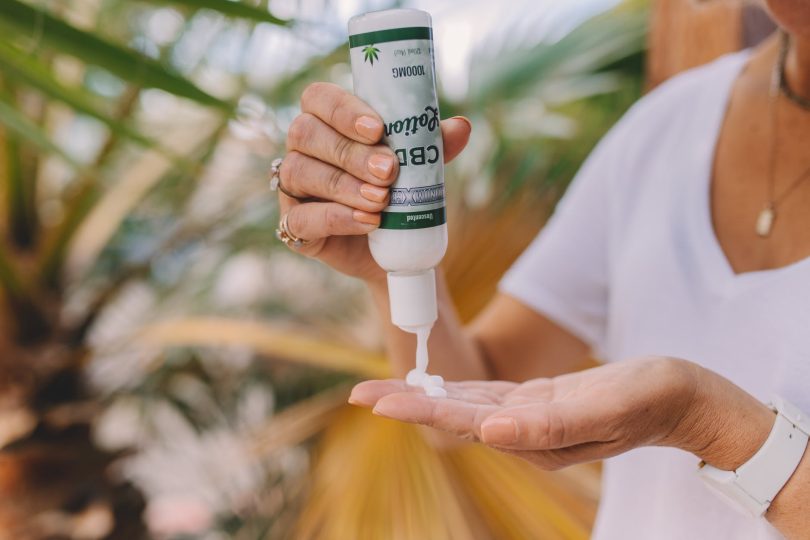
CBD cosmetics still exist, particularly among smaller brands that treat CBD as one ingredient rather than the product’s entire reason for being. What could bring the category back is workable regulation and evidence: ordinary access to retailers, advertising and payment processing on one side, and on the other the thing this site says about every CBD claim. A properly controlled trial showing a CBD cream doing something the same cream without CBD does not — in a way that survives the design problems of the skin studies so far — would do more for CBD beauty than every celebrity launch of 2019 combined. Until then, buy the cream because you like the cream, and check the certificate of analysis if you are paying extra for what’s in it.
Photo: Pexels.com
Sources: Fashionista, July 2023; Glossy, January 2023; Arnold & Porter advisory on Section 781; FDA Q&A on cannabis-derived products.
Nothing in this article is medical advice.